
Every traveler who visits Lombok's pearl shops has asked the same question at least once: is this pearl real, or am I looking at a piece of plastic? It is a fair concern. The market is full of imitations — some clumsy, some surprisingly convincing. The good news: with a few simple tests and a little observation, most fakes reveal themselves quickly.
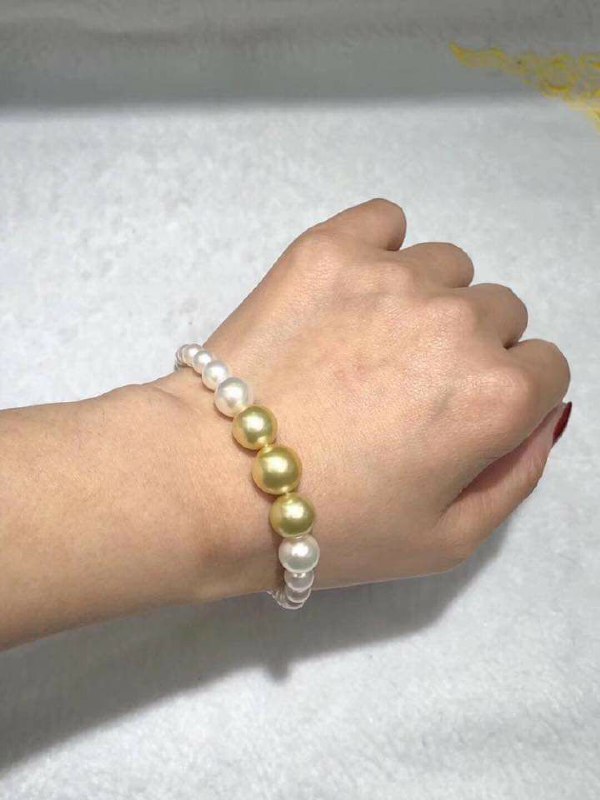
Why Fakes Are Everywhere
Plastic imitation pearls are cheap to produce and can mimic the roundness of real pearls almost perfectly. Glass pearls, resin-coated beads, and even painted plastic spheres all exist on the market. They are sold in souvenir stalls, markets, and sometimes even in jewelry stores that should know better.
The people selling them are not always dishonest. Many sellers genuinely do not know the difference. That is why knowing how to spot a fake protects you anywhere — from a street market in Senggigi to a boutique in Jakarta.
The Tooth Test: Quick and Surprisingly Reliable
Gently rub the pearl against the edge of your front teeth. A real pearl feels gritty — like fine sandpaper. This texture comes from the microscopic layers of nacre (the substance that forms the pearl). Plastic and glass imitations feel smooth and slippery, because their surface has no layered structure.
This is the classic jeweler's test, and it works in most cases. The only exception: high-quality imitation pearls coated with real nacre dust. These can fool the tooth test, so use it as a first filter, not the final verdict.
The Eyes Have It: Visual Inspection
Hold the pearl under bright light and look closely:
- Surface texture: Real pearls have tiny, irregular ridges and pits — like a fingerprint. Plastic pearls are unnaturally smooth.
- Luster: Real nacre reflects light from within the pearl, creating a soft, deep glow. Plastic reflects only from the surface — a hard, flat shine.
- Color depth: Genuine pearls show subtle color variations — a hint of rose, silver, or gold within the white. Plastic is a single flat color.
- The drill hole: On a real pearl, the drill hole has crisp edges and you can often see the nacre layers inside. Plastic pearls show melted or rough hole edges.
The Fingernail Scrape Test
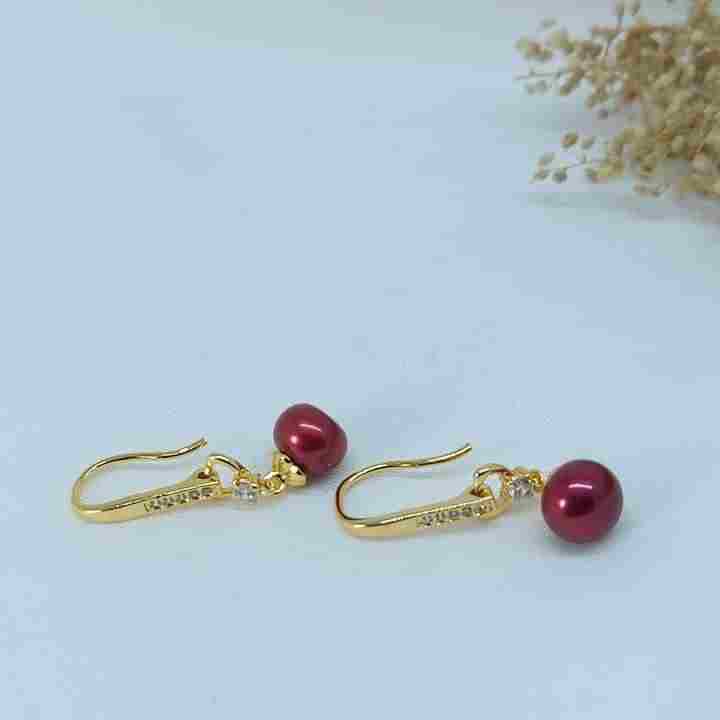
Gently scrape the pearl with your fingernail. A real pearl will produce a fine white powder that can be wiped away without leaving a mark. Plastic will not produce powder — the surface stays smooth. This test should be done gently, and only on pearls you are considering buying.
Weight and Temperature: The Feel Test
Real pearls feel cooler than room temperature when you first touch them, then slowly warm up. They also have a satisfying weight — dense and solid. Plastic pearls are lighter and warm up almost instantly, because plastic is a poor conductor of heat.
Glass pearls, on the other hand, feel heavier than real pearls. If a strand feels oddly heavy for its size, that is a clue.
The Price Test: If It Looks Too Good to Be True
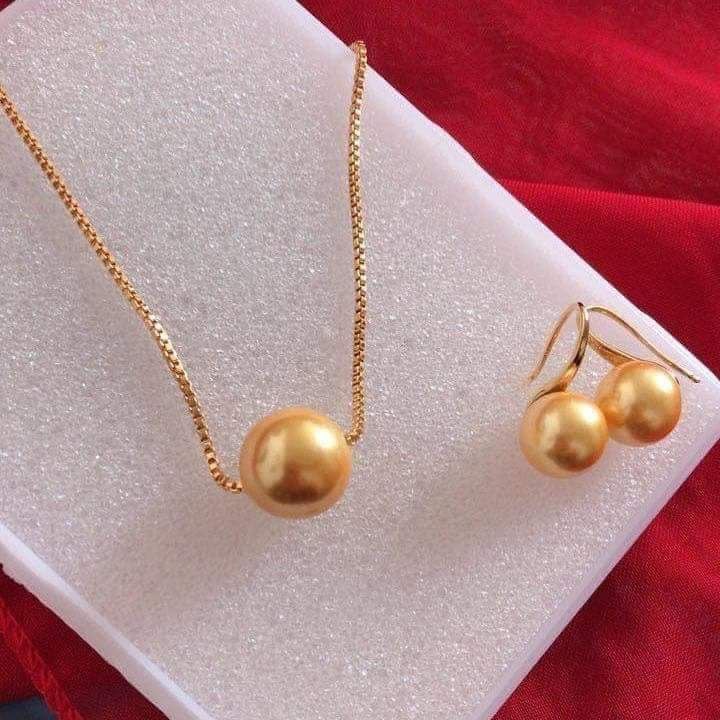
A perfectly round, perfectly matched strand of genuine South Sea pearls — uniform in color, size, and luster — is one of the rarest and most expensive items in the jewelry world. If a vendor offers such a strand for under a hundred dollars, it is not a bargain. It is a fake, or the pearls are of very low quality with heavy treatment.
Nature does not produce perfection in bulk. Rarity is precisely why genuine pearls command premium prices.
Common Buyer Mistakes to Avoid
- Relying on the bite test only: Some coated fakes pass the tooth test. Combine it with visual inspection.
- Trusting the "scratch with a knife" trick: Scratching a pearl with a blade can damage a real pearl. This test is destructive and unprofessional.
- Believing "it sinks, so it's real": Some plastics and glass formulations sink too. Weight alone proves nothing.
- Buying from vendors who cannot answer questions: A legitimate seller can explain where the pearls come from, what type of oyster produced them, and why the price is what it is. Vague answers are a red flag.
- Ignoring the clasp and craftsmanship: On a genuine piece, the clasp, threading, and finishing match the quality of the pearls. Sloppy work on a "luxury" strand is a contradiction.
Frequently Asked Questions
Are real pearls always perfectly round?
No. In fact, perfectly round pearls are the exception, not the rule. Most genuine pearls are slightly off-round, oval, or baroque. That is why round matched strands are so expensive — and why a "perfect" strand sold cheaply is suspicious.
Can I test a pearl at home with vinegar?
Vinegar (acid) will slowly dissolve the calcium carbonate in real nacre — but it also ruins the pearl. This destructive test is not recommended. Use the visual and tooth tests instead.
Do all real pearls come from Lombok?
No. Pearls sold in Lombok may come from local farms, other Indonesian regions, or international suppliers. A genuine pearl is not automatically a Lombok pearl. Ask about origin, and buy from sellers who are transparent about sourcing.
What is the best way to verify a pearl before buying?
Ask for a certificate from a recognized gemological laboratory. Reputable sellers of high-value pearls can provide documentation of origin and grading. For lower-value purchases, combine the tooth test, visual inspection, and price judgment.
---
Visiting Lombok soon? Take time to explore pearl jewelry with curiosity: ask about origin, compare craftsmanship, and choose a piece that feels personal. The right pearl can become more than a purchase — it can become a lasting memory of Indonesia.
If you found this article helpful, please share it on your social media.
Explore more: South Sea Pearl Grading: How to Judge Luster, Shape, and Surface and Lombok Pearls vs Freshwater Pearls: What Is the Difference?
Visit our website or chat on WhatsApp for authentic Lombok pearls.
Post a Comment